
The short answer
A small healthcare project, such as a clinic website with online booking, starts at about $1,500. A patient booking app with payments, reminders and an admin dashboard usually costs $4,000 to $15,000. A full platform with web, iOS and Android apps, patient records and integrations starts at around $15,000.
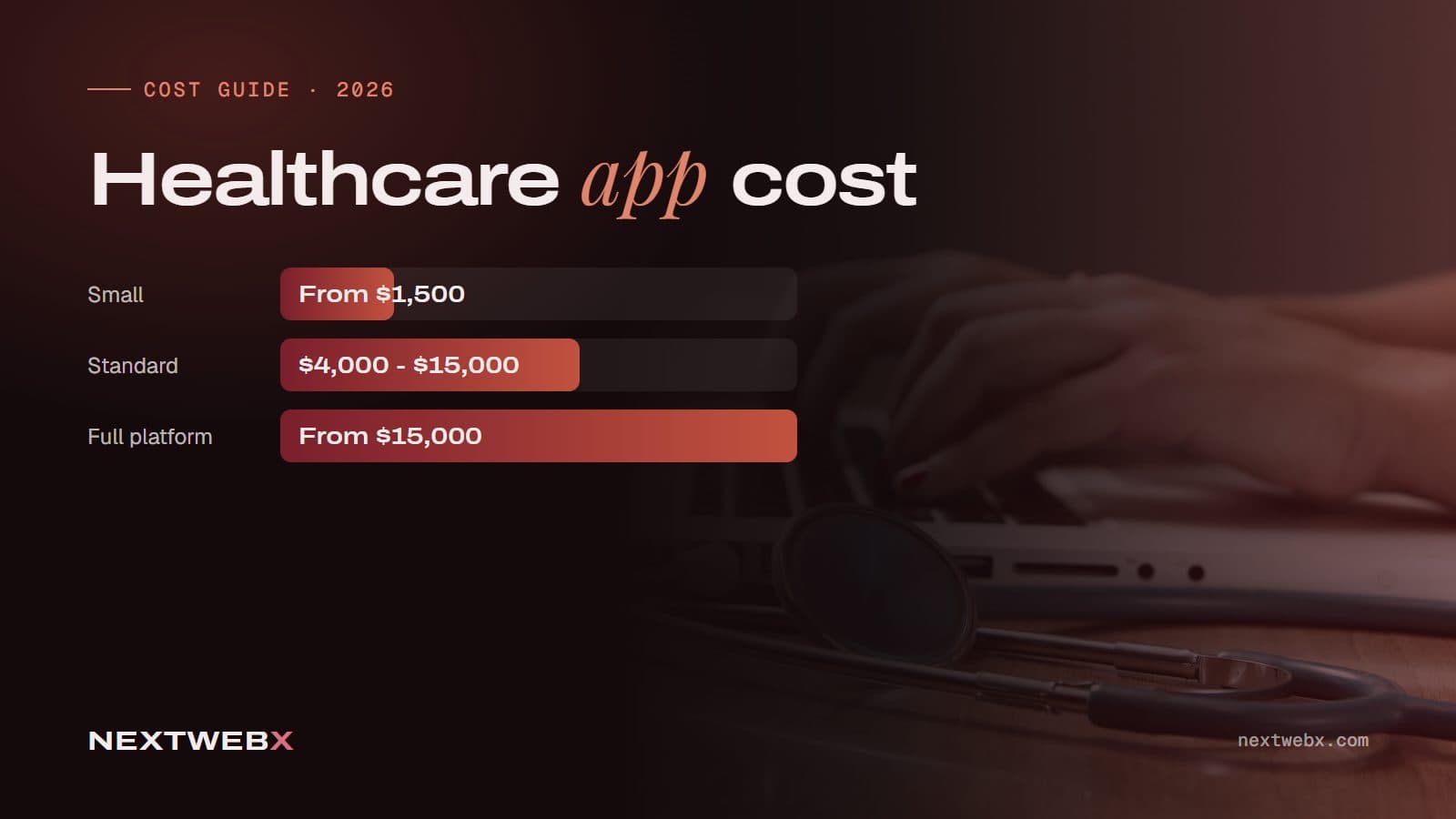
The cost of a healthcare app depends far more on what it has to do than on the industry label. A clinic that needs patients to book a slot online has a very different project from a hospital group that needs patient records, lab results and video consults across five branches.
Below are the price ranges we quote at NextWebX, what moves a project from one range to the next, and how to keep the first version affordable.
Healthcare app cost by project size
| Size | Typical cost (USD) | What you get | Timeline |
|---|---|---|---|
| Small | From $1,500 | Clinic website with online booking or enquiry forms, doctor profiles and WhatsApp contact | 2-4 weeks |
| Standard | $4,000 - $15,000 | Patient booking app or portal with payments, reminders, records and an admin dashboard | 6-12 weeks |
| Full platform | From $15,000 | Web, iOS and Android apps, multi-branch scheduling, patient records, lab or practice-system integrations, teleconsults | 12-20 weeks |
What drives the cost
- Platforms
- A website alone costs least. Adding iOS and Android apps adds work, although one React Native codebase keeps it far below the cost of two native apps.
- Patient data and compliance
- Records, reports and prescriptions need encryption, role-based access and audit logs, and a design that fits the rules you work under, such as HIPAA, GDPR or India's DPDP Act.
- Integrations
- Connecting to a lab, billing or practice system takes time that depends on how good that system's API is. We check it in the discovery sprint before quoting.
- Branches and roles
- One clinic with two roles is simple. Several branches, doctors, receptionists and managers, each seeing different data, adds screens and rules.
- Payments and reminders
- Online deposits, invoices and WhatsApp or SMS reminders are common, well understood additions that each add a little to the scope.
Features most clinics ask for
- Online booking with doctor and slot selection
- WhatsApp, SMS and push reminders
- Deposits and online payments
- Patient portal with reports and prescriptions
- Multi-doctor and multi-branch schedules
- Admin dashboard and daily reports
- Follow-up reminders and feedback
- Video consultations through a trusted provider
How long it takes
- 1.Discovery (1-2 weeks, paid): goals, users, compliance needs and integrations, ending in a written brief and a fixed quote.
- 2.Design (1-3 weeks): screens and a clickable prototype your staff can try.
- 3.Build (2-12 weeks): weekly sprints with a live demo every Friday.
- 4.Launch and support: go-live and store release, with 30 days of support at no extra cost.
How to keep the cost down
- Launch booking and reminders first, then add the patient portal once patients are using it.
- Use one React Native codebase for iOS and Android instead of two native apps.
- Start with one branch and add the others when the workflow is proven.
- Use a proven video-call provider instead of building video from scratch.